
Why Iceland?
Home » Why Iceland?
Why Iceland?
Iceland is a country entirely of volcanic origin, spanning from highly explosive, glacier covered central volcanoes to effusive basaltic fissure systems on land, to small volcanic islands and submarine eruptive centers of the coast. It covers 104.000 km2, but holds only about 400.000 inhabitants, of which 60% reside in the greater capital area.
The conference venue for the upcomming Cities on Volcanoes 14 conference is located close to down-town Reykjavík (capital), hence very relevant to the CoV mission yet not in an area defined as a natural hazards zone with respect to lava flows.
Only the outskirts of the greater capital area fall within active fissure systems defining the plate boundary on Reykjanes Peninsula in southwest Iceland. However, the entire capital area is at risk from ashfall, gas emissions and seismic activity from the nearby volcanic systems.
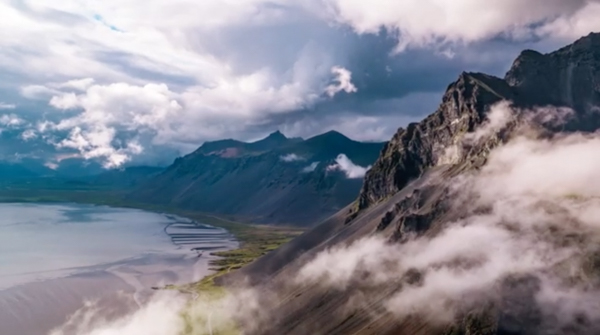
In Iceland, there are no indigenous aspects to take into consideration, as Icelanders are the direct descendants from the Viking settlers that arrived in the country about 1100 years ago. Since the Icelandic settlement, at least 150 individual volcanic eruptions as well as eight rifting events (with multiple eruptions) are known to have taken place. Since the settlement, the Icelandic people have lived in a highly dynamic and unpredictable, at times hostile, environment. Throughout history, they have experienced powerful volcanic events, such as the large lava eruption of Laki in 1783–84 and major explosive eruptions like Öræfajökull in 1362. More recently, the eruption of Eyjafjallajökull in 2010 disrupted global air travel and grounded more than 100,000 international flights. Facing challenges like these has helped shape Iceland into a resilient and innovative nation, with a strong focus on flexibility and problem-solving.
In 2021, inhabitants of the Reykjanes Peninsula suddenly saw themselves living in the laboratory of the country’s volcanologists, as the peninsula reawakened after 800 years of volcanic quiescence. The Reykjanes Peninsula is a part of the plate boundary running through Iceland, and is made up of five volcanic systems that create new plate material in periods with repeated rifting events, alternating with several hundred years long dormancy periods. It is the most densely populated region in Iceland aside from the capital area, and has since 2023 suffered unprecedented disruptions due to tectonic and volcanic events, starting with the complete evacuation of the town of Grindavík in November 2023. The volcanic reawakening presents new challenges for long- and mid-term hazard forecasting and urban planning. Future scenarios, scientifically grounded in the geological records of past events, are expected to affect the Icelandic capital and suburbs, as it is partly situated within one of the volcanic systems that may be reactivated during the current volcanic era. Reykjavik is therefore a highly suitable candidate for hosting CoV14 in 2028 and we hereby invite the Cities on Volcanoes community to join in a place where science, society, and volcanism intersect every day. The current active volcanic cycle at Reykjanes presents an unparalleled educational opportunity to showcase recent years of real time volcanic crisis management at the Svartsengi volcanic system, including innovative, large-scale actions to protect inhabitants and infrastructure, to the international conference attendees. We therefore welcome the opportunity for hosting the CoV14 conference in 2028 in Reykjavík, Iceland with the caption “Living on the edge. The disaster management cycle in volcanic regions“.
Iceland is regularly acknowledged as one of the safest destinations globally in terms of violent crime. The country is peace loving and there is no Icelandic army. It is renowned for its commitment to human rights, freedom of religion, and is also celebrated as one of the world’s most gender-equal nations. In 1980, Iceland made history by electing Vigdís Finnbogadóttir, the world’s first female president chosen through a democratic election. Additionally, Iceland welcomes all genders and has extensive anti-discrimination laws that extend beyond the workplace to everyday life, public services, and communal spaces.